ELECTRIC IMPACT KIT — WHEN MEMORY BECAME IDENTITY
ELECTRIC IMPACT KIT — WHEN MEMORY BECAME IDENTITY
Some football clubs create jerseys for competition.
Others create them for sales.
The Electric Impact Kit from Iron City FC SC was created from transition.
Before the club fully evolved into what people now recognize as Iron City FC SC, there was another era — one built through struggle, identity searching, leadership, and culture forming in real time. At the center of that period was a captain whose presence helped shape the emotional foundation of what the club would eventually become.
The Electric Impact Kit begins there.
Not as nostalgia. Not as a throwback. But as continuation.
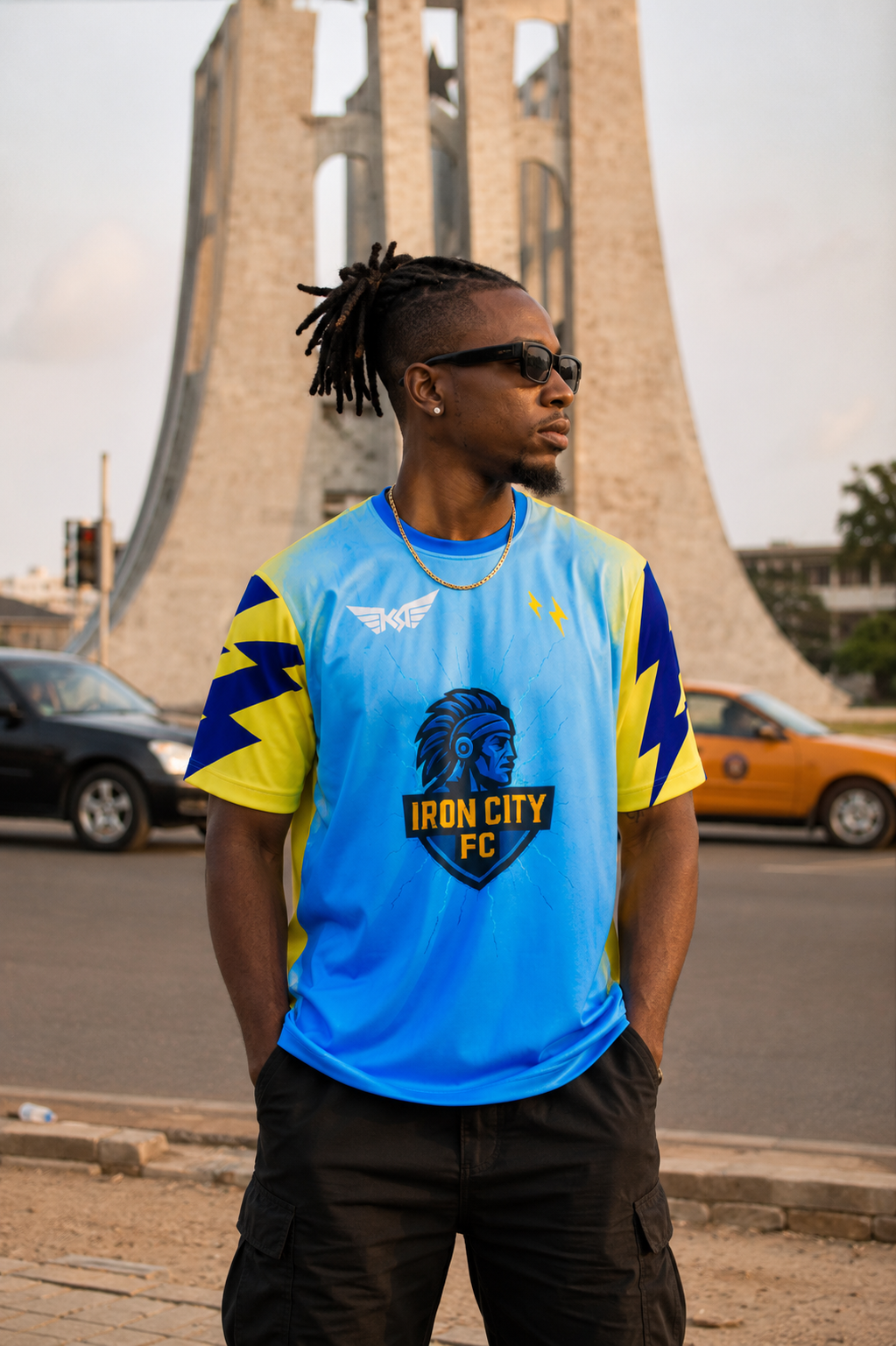
Inspired heavily by Honduras, the jersey carries layers of meaning throughout every section of the design. The front panel blends tones inspired by the Honduran national flag into a modern two-tone composition that feels alive in motion. Depending on lighting and movement, the jersey shifts visually, creating a feeling of electricity instead of flatness.
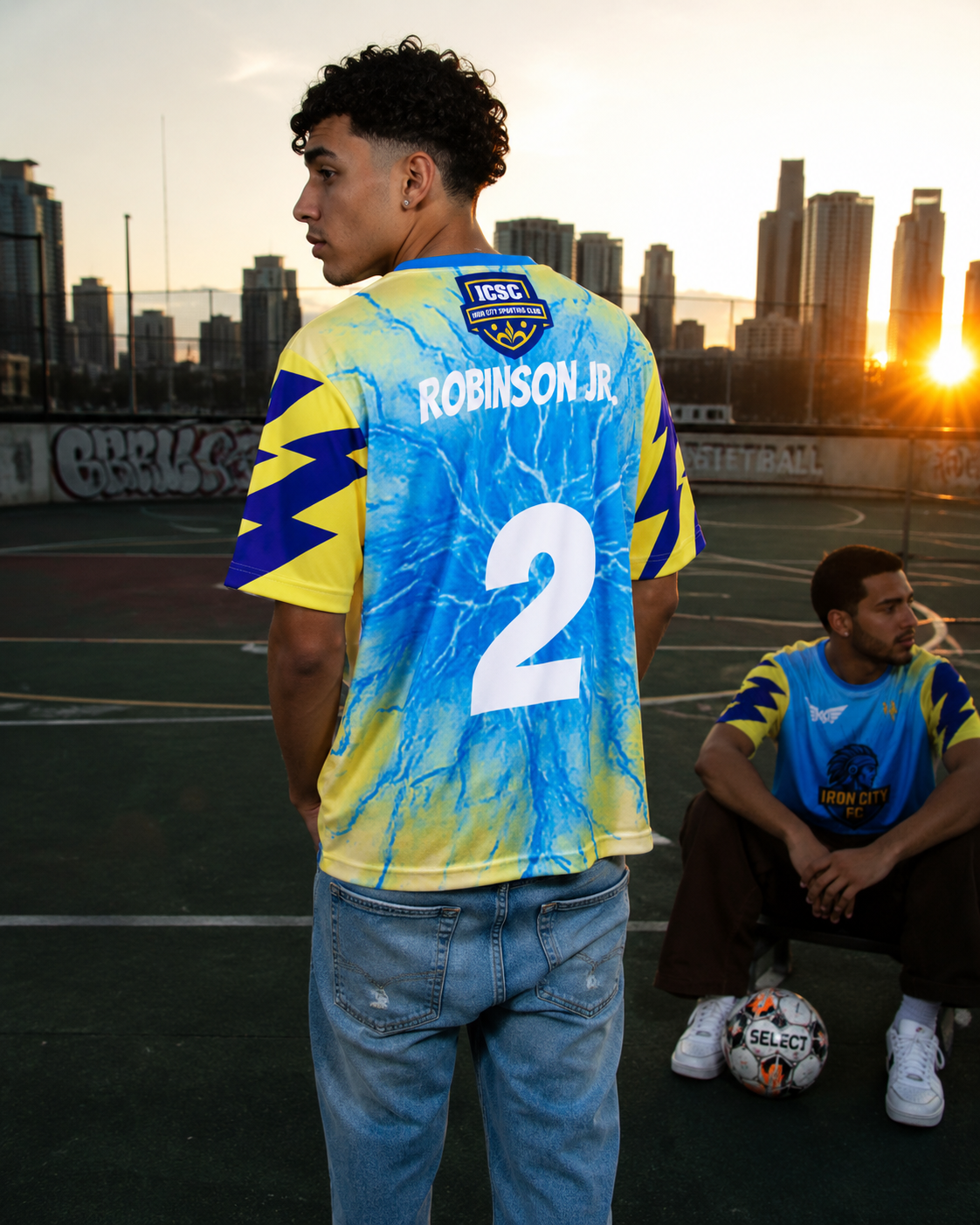
That energy continues across the back of the jersey where the color transitions into a deep yellow inspired by the Honduran sun and climate. It represents heat, movement, pressure, and endurance — the idea that identity remains visible even under intensity.
Placed on top of that yellow surface are sharp white numbers designed to remain clean and unmistakable. Minimal in appearance, but symbolic in function.
Underneath the visible design exists another layer entirely.
Embedded into the jersey is a Honduran tribal-inspired pattern woven subtly into the fabric itself. It is intentionally not the loudest element of the kit. It sits underneath the surface almost like hidden memory — representing ancestry, roots, rhythm, and inherited identity carried quietly through movement.
The rollout surrounding the Electric Impact Kit reflects the same philosophy.
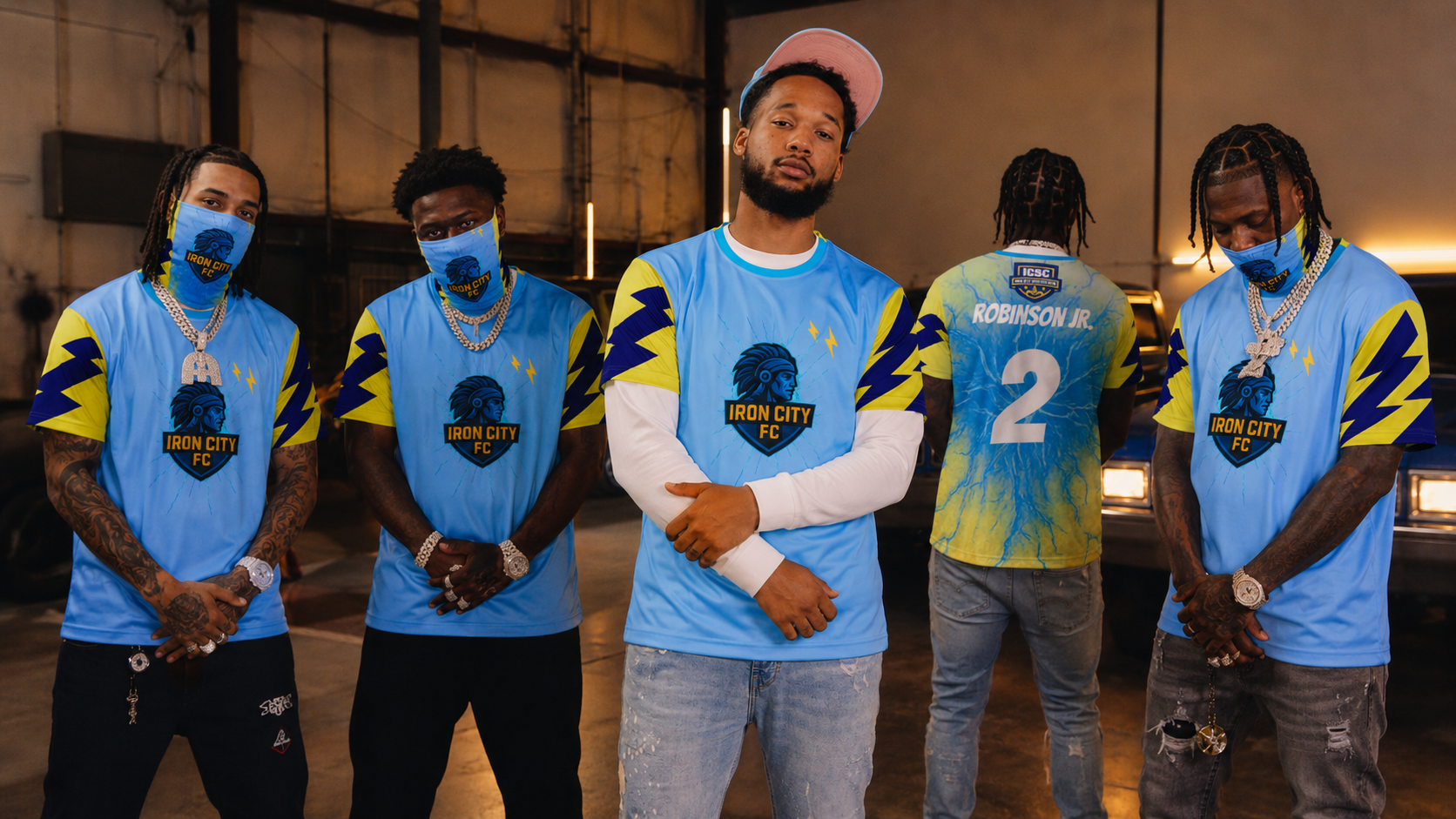
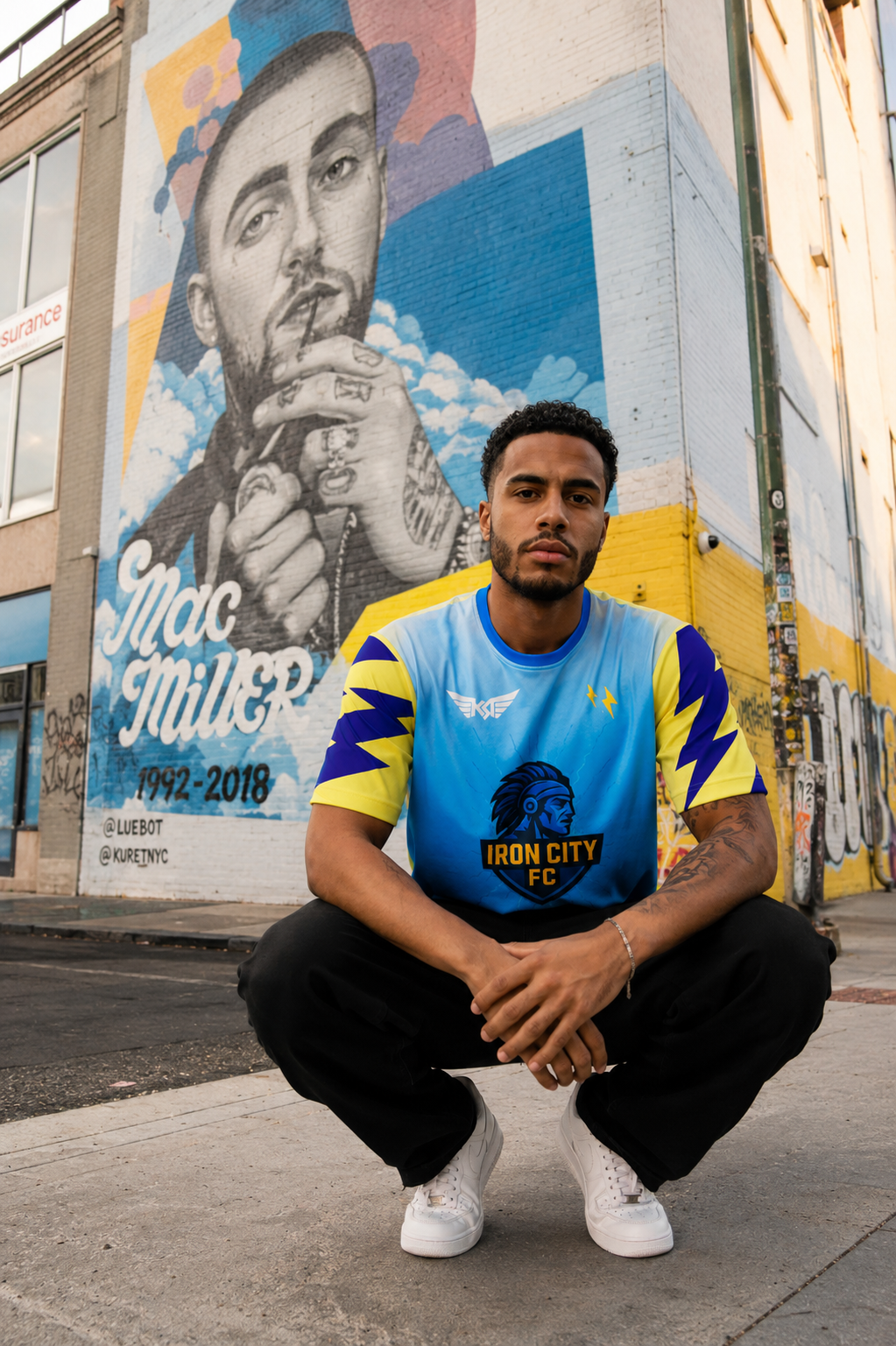
Rather than placing the jersey into traditional football marketing environments, Iron City FC SC positioned the release across multiple cultural spaces simultaneously.
In one visual, masked rappers wear the jersey in a way that transforms it from sportswear into cultural armor. The anonymity shifts attention away from celebrity and toward atmosphere, symbolism, and presence.
In another setting, a Honduran player and his friend stand on an outdoor court framed against a skyline backdrop. The imagery feels grounded in community while simultaneously connected to ambition and city energy.
Then the same jersey appears again in Accra, Ghana.
Different environment. Different streets. Different atmosphere.
Same identity.
That decision reveals one of the most important aspects of the Electric Impact Kit: it was not designed to belong to one location. It was designed to move.
The release also expands through the involvement of ambassador Kenny Robinson Jr., whose presence reinforces the club’s connection between football, individuality, fashion influence, and modern culture. Instead of separating football from lifestyle, the project intentionally blends them together.
At Iron City FC SC, the number 2 now carries permanent symbolic meaning as well. Every player who wears #2 for the club will also carry the Kenny Robinson ambassador mark directly on their jersey. The number becomes less about roster assignment and more about representation.
That idea reflects the overall philosophy behind the Electric Impact Kit itself.
Identity must be earned.
Culture must be carried.
Legacy must be visible.
The Electric Impact Kit is not attempting to fit inside existing American soccer aesthetics. It exists outside of them entirely — blending global football influence, Honduran inspiration, underground visuals, city culture, music energy, and personal history into one evolving identity.
Some clubs release kits.
Iron City FC SC releases chapters.